Forklift Safety Starts Together: 5 Ways to Build a Safer Workplace
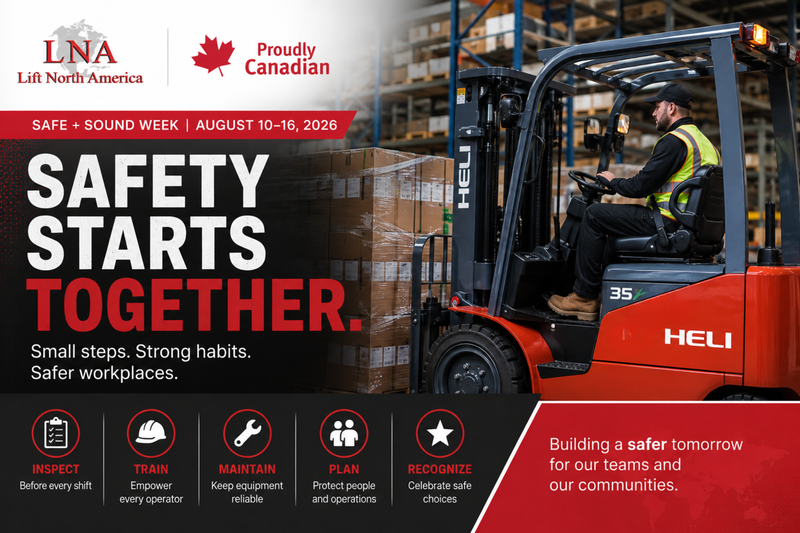
Safe + Sound Week | August 10–16, 2026
A safe workplace starts with more than the right equipment. It starts with people, training, communication, and a commitment to keeping safety at the centre of daily operations.
In recognition of Safe + Sound Week, Lift North America is highlighting the importance of proactive workplace safety and the role that proper forklift operation, training, inspections, and maintenance can play in creating safer material handling environments.
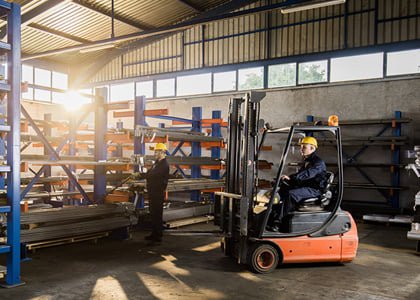
For businesses operating forklifts and other material handling equipment, safety should not be treated as a once-a-year initiative. It should be part of the everyday process—from the start of a shift to the completion of every lift.
1. Start Every Shift With a Forklift Inspection
A pre-shift inspection is one of the simplest ways to identify potential issues before equipment goes into operation. Operators should follow their company’s established inspection procedures and look for signs of damage, wear, leaks, or other conditions that could affect safe operation.
Depending on the equipment, this can include checking:
- Tires and wheels
- Forks and attachments
- Mast and lifting components
- Brakes and steering
- Lights, horns, and warning devices
- Seat belts and operator restraints
- Hydraulic systems
- Battery or fuel systems
- Visible leaks or damage
If a safety-related issue is identified, the equipment should be handled according to the company’s safety procedures and manufacturer recommendations before returning to service.
The goal is simple: identify problems before they become bigger problems.
2. Keep Forklift Operators Properly Trained
Even the most advanced forklift is only as safe as the people operating it. Proper operator training helps employees understand how to safely operate equipment, recognize workplace hazards, handle loads, navigate pedestrian areas, and respond appropriately to changing conditions.
Training should also reflect the actual equipment and working environment. A warehouse, manufacturing facility, distribution centre, construction site, and outdoor yard can each present very different operating conditions.
At Lift North America, operator training is part of our commitment to helping businesses build safer and more productive material handling operations.
3. Make Preventive Maintenance Part of the Safety Process
Regular maintenance is about more than keeping equipment running. It can also help identify worn or damaged components before they affect equipment performance and workplace safety.
A proactive maintenance program can include scheduled inspections, servicing, repairs, and replacement of worn components based on equipment condition and manufacturer recommendations.
For businesses operating multiple forklifts, a structured maintenance program can also make it easier to track equipment condition, identify recurring issues, and reduce unexpected downtime.
A well-maintained forklift is an important part of a well-managed fleet.
Lift North America provides service and maintenance for forklifts and material handling equipment, helping businesses keep their equipment operating reliably.
4. Create a Safer Environment Around the Forklift
Forklift safety is not only the responsibility of the operator. Pedestrians, supervisors, warehouse teams, loading crews, and other employees all play a role in creating a safer work environment.
Businesses can review areas such as:
- Pedestrian and forklift traffic patterns
- Marked walkways and crossings
- Visibility around corners and intersections
- Loading and unloading areas
- Warehouse congestion
- Storage and stacking practices
- Lighting and signage
- Communication between operators and pedestrians
Small changes to the workplace can make a meaningful difference when they help separate people from moving equipment and improve visibility and communication.
5. Recognize Good Safety Practices
Safety programs are most effective when safety becomes part of the workplace culture. Take time to recognize employees who consistently follow safe operating practices, complete inspections, report equipment concerns, participate in training, and help identify potential hazards.
Recognition can encourage employees to continue speaking up about safety and help reinforce the idea that workplace safety is a shared responsibility.
Safe + Sound Week is a good reminder to recognize the safety efforts already taking place within your organization—and look for opportunities to improve them.
Safety Is a Continuous Process
Forklift safety does not begin and end with operator training. It is built through the combination of proper equipment, trained operators, regular inspections, preventive maintenance, and a workplace culture that puts safety first.
Whether you operate a single forklift or manage a large fleet, taking a proactive approach can help create a safer, more productive material handling environment.
At Lift North America, we support businesses across Canada with forklift and material handling solutions, including new and used forklift sales, rentals, service and maintenance, parts, operator training, inspections, and fleet support.
If you are reviewing your forklift fleet or workplace safety practices, our team can help you identify the right equipment and support solutions for your operation.
Safety starts together. Let’s keep moving it forward.
Need help with your forklift fleet? Contact Lift North America to discuss equipment, training, service, maintenance, or parts support.
